
Cobb, Paulding, Southern Cherokee & Bartow

Text us - (423) 567-5326

The Complete Homeowner’s Guide to Dumpster Rentals
The Complete Homeowner’s Guide to Dumpster Rentals
Whether you’re clearing out a garage, remodeling a kitchen, cleaning up the yard, or prepping a house for sale, one of the biggest logistical questions is: What do I do with all the debris and junk? That’s where a dumpster rental comes in.
Renting a dumpster can simplify your cleanup: you get a container delivered, you fill it at your pace, and it’s hauled away when you’re done. But not all dumpsters are equal, and without proper planning you could face extra costs, driveway damage, permit headaches or size‑mismatch.
In this guide we’ll cover:
Why dumpster rentals are a smart choice for homeowners
What size/type options exist and how to pick the right one
Placement, driveway & permit considerations
Pricing and cost factors you should know
Best practices for loading and what not to toss
Common mistakes to avoid
Localized tips for suburban homeowners
FAQs and how to get started
You’ll finish this blog prepared to rent a dumpster confidently—and get the most value while avoiding common pitfalls.
1. Why Rent a Dumpster? The Homeowner Advantage
Efficiency & simplicity
Instead of making multiple trips to the local dump or transfer station, a single delivery of a dumpster lets you load everything in one place. Industry guides call this the “one‑stop” advantage of dumpsters. Dumpsters+1
Time & labor savings
Loading your own truck or trailer, driving, unloading, returning—all that adds up. A dumpster centralizes the job so you spend less time logistics and more time actually cleaning.
Safety & cleanliness
Debris strewn about can be hazardous—sharp edges, nails, unstable items. A dumpster contains the mess and keeps your site safer.
Better property protection
For residential homes, especially ones with driveways, landscape, or slopes, properly placed dumpsters avoid damage, whereas repeated dump trips or heavy trailers can scar driveways.
Flexibility for various projects
Whether you’re doing a small clean‑out or a full remodel, dumpster rentals scale. They’re suited for all kinds of homeowner tasks. Infinite Disposal+1
2. Dumpster Sizes & Types: What Your Options Are
Size matters
Dumpster sizes are measured in cubic yards (or yards) and volume/weight capacity. Common sizes: 10‑yard, 12‑yard, 14‑yard, 20‑yard, 30‑yard. Rumpke+1
Residential‑friendly sizes
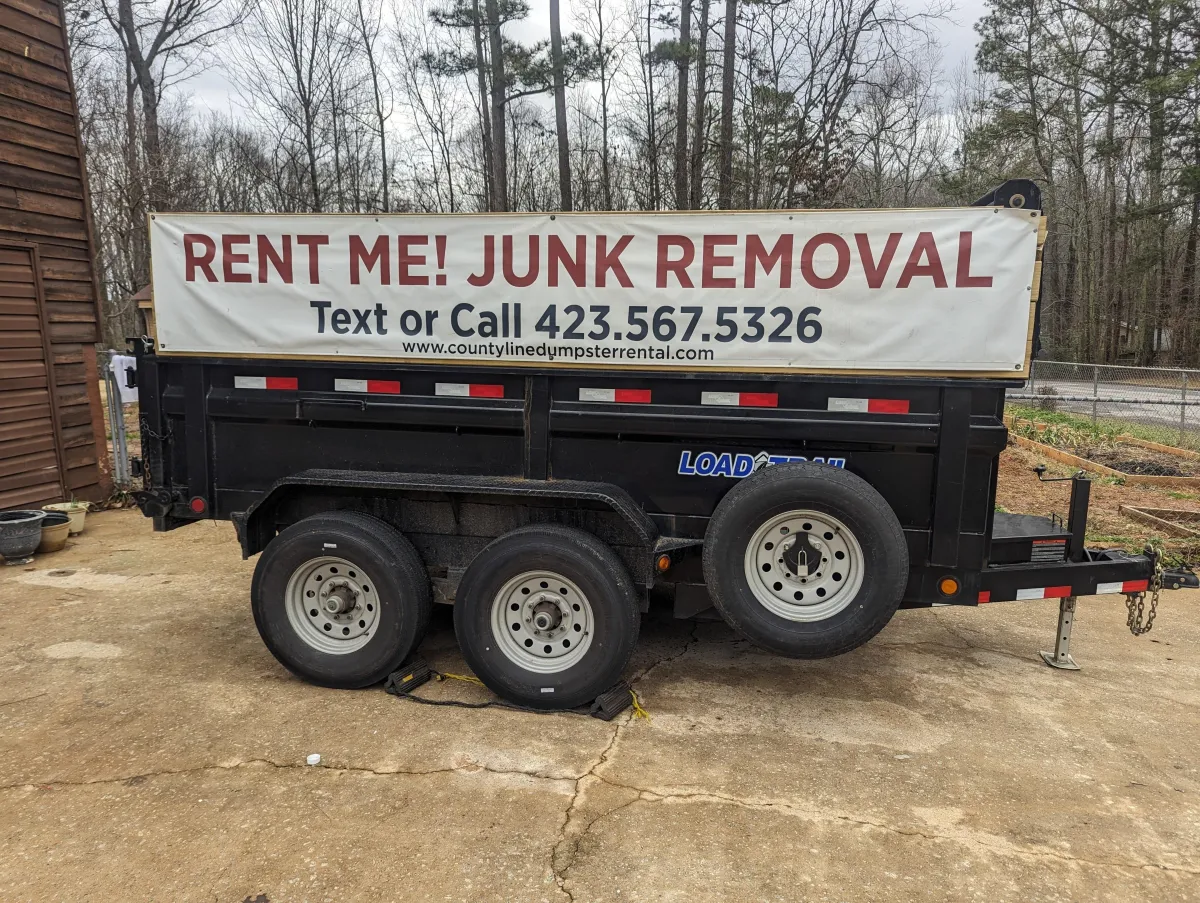
For homeowners, you’ll often see trailer style or roll‑off sizes suited for driveways rather than massive commercial containers.
Factors impacting size choice
Volume of debris: how much you’re throwing out
Type & weight of material: heavy materials (tile, concrete, dirt) reduce capacity quicker
Site access & driveway constraints: width, overhead clearance, slope
Matching size to project
Small clean‑out (garage, attic): smaller size (e.g., 10‑12 yard)
Moderate remodel (kitchen, multiple rooms): mid size (12‑20 yard)
Major demo / full house: larger size (20‑30+ yard)
Why size choice matters
Oversizing wastes money. Undersizing forces you to upgrade or make multiple rentals. Smart sizing saves both time and cost.
3. Placement, Permits & Residential Considerations
Driveway & site access
Measure your driveway width, check slope, overhead clearance (trees, wires), surface strength (older concrete vs asphalt vs pavers). A poor access path can lead to delays or damage.
Permits and local rules
If the dumpster sits on your private property, often you don’t need a permit. But if you place it on the street, sidewalk, or public right‑of‑way, your city or HOA may require a permit. Infinite Disposal+1
Property protection
Protect your surfaces—some homeowners put boards under trailer wheels, clear landscaping and mark sprinkler heads.
HOAs & neighborhood rules
Some homeowner associations limit dumpster size, placement duration, or location. Always check ahead of time.
Timing & scheduling
Deliver before your heavy loading begins; pick‑up once you’ve filled it to avoid paying extra rental days or causing clutter.
4. Pricing & What Drives Cost
What you’ll pay for
Delivery to your site
Rental period (typically 5‑10 days)
Disposal fees (tipping) based on weight and local landfill rates
Pickup when you’re done
What drives the cost
Size of dumpster (larger costs more)
Duration of rental (longer period = higher cost)
Location/delivery logistics (distance, difficult access)
Type and weight of debris (heavy stuff = more cost)
Hidden or extra fees (over‑weight, prohibited items, permit fees) Debris Box Online+1
How to control cost
Estimate volume/weight correctly to pick appropriate size
Avoid heavy materials if possible or consider segregation
Finish loading quickly and schedule pickup
Work with local provider (less distance/fuel cost)
Typical pricing ballpark
While prices vary widely by region, size and materials, many guides show average residential rentals ranging from a few hundred dollars upward depending on scope. Dumpsters
5. Safe Loading & What You Can (and Cannot) Toss
Loading best practices
Put heavy/bulky items on the bottom
Break down and flatten large pieces (furniture, boxes)
Fill gaps with smaller debris
Keep load level and under the “fill line” to avoid over‑fill problems
What you can typically toss
Furniture, boxes, home debris, yard clean‑up, remodeling materials (cabinetry, drywall, fixtures)
What you usually cannot toss
Hazardous materials (paint, oil, solvents), tires, batteries, electronics, appliances with refrigerants unless separately handled. Google or local guidelines often list these. Wikipedia+1
Why it matters
Putting prohibited items can lead to load rejection or extra fees. Over‑filling or weight overload may cause surcharge.
6. Common Mistakes Homeowners Make (And How to Avoid Them)
Mistake: Picking wrong size
Under‑sizing forces multiple rentals; Oversizing wastes money.
Mistake: Ignoring driveway/access issues
No clearance, blocked driveway, too steep—can derail delivery.
Mistake: Loading prohibited/heavy items unknowingly
Leads to extra cost or non‑pickup.
Mistake: Letting the dumpster sit longer than necessary
Extra rental days = extra cost.
Mistake: Not shopping around or understanding all fees
Hidden fees and vague contracts lead to surprises.
7. Local (Suburban Homeowner) Tips
If you’re in a suburban neighborhood, like many homes in Cobb or Paulding County:
Choose a provider who offers driveway‑appropriate units and understands residential access.
Ask for flat‑rate pricing with transparent list of included days and tonnage.
Ensure you clear vehicles and overhead obstacles ahead of delivery.
Prefer a company that handles driveway protection (no damage).
Book ahead of busy seasons (spring/fall) to avoid delays.
8. Getting Started: The Steps to Rent a Dumpster
Assess your project: What debris, how much volume/weight, timeline.
Select size & get quotes: Compare at least two local providers, ask about size options, days, weight allowance, included logistical fees.
Prepare placement: Clear driveway, mark location, check permits, provide clear instructions to provider.
Load wisely: Plan your loading order, follow best practices, adhere to limitations.
Schedule pickup: When you’re filled (or done), call for pickup, clear the area, ensure you’re within rental period.
Post‑cleanup check: Verify site condition, ensure no debris left behind.
FAQ (Frequently Asked Questions)
Q: Do I need to be home for delivery or pickup?
A: Not always. If you provide clear placement and driveway access, many providers will deliver without you.
Q: How long can I keep the dumpster?
A: Standard is often 5‑10 days for residential. If you need more time, extension fees usually apply.
Q: What happens if I exceed weight limit?
A: You may be charged overage fees (per ton or per extra unit weight) or asked to remove excess debris.
Q: Can I move the dumpster myself once it’s placed?
A: No—moving it typically requires the rental company’s equipment and may incur fees or liability issues.
Q: Are permits always required?
A: Not if placed on private property (driveway). If placed on public street/sidewalk, yes—you’ll likely need a permit.
Conclusion
Renting a dumpster is more than just dropping a container and tossing junk. Done right, it simplifies your cleanup, keeps your property safe, saves you time, and can save you money compared to multiple trips to the dump. For homeowners tackling remodels, cleanouts, yard work or just clearing clutter, the key is planning, choosing the right size, checking access and rules, and loading smartly.
If you’re ready to move forward, partner with a local, reliable dumpster rental provider, measure your needs, get transparent pricing, and get your site cleaned up with confidence.
Call to Action
🛠 Ready to begin your cleanup project? Contact us at County Line Dumpster Rentals for driveway‑friendly, homeowner‑optimized dumpsters. We’ll help you pick the right size, schedule delivery, and get your site cleared—no surprises. Visit CountyLineDumpsterRental.com
or call us today to reserve your unit.

Contact Us

Text us - 423.567.5326

SERVICE AREA

Cobb County
Paulding County
Southern Cherokee & Bartow County
BLOG
© copyright 2023 All Rights Reserved. Privacy Policy